Endoscopy
OGDS / Gastroscopy
A camera examination of the oesophagus, stomach and upper small intestine.
OGDS, or gastroscopy, uses a flexible camera passed through the mouth to examine the oesophagus, stomach and first part of the small intestine. It helps identify possible causes of upper gastrointestinal symptoms.
When should you be assessed?
- Persistent heartburn or upper abdominal pain
- Difficulty or pain when swallowing
- Recurrent vomiting
- Vomiting blood or passing black stools
- Anaemia without a clear cause
- Unexplained weight loss or loss of appetite
How is it assessed?
- Pre-procedure assessment
- Fasting according to instructions
- Review of blood-thinning medication, allergies and existing medical conditions
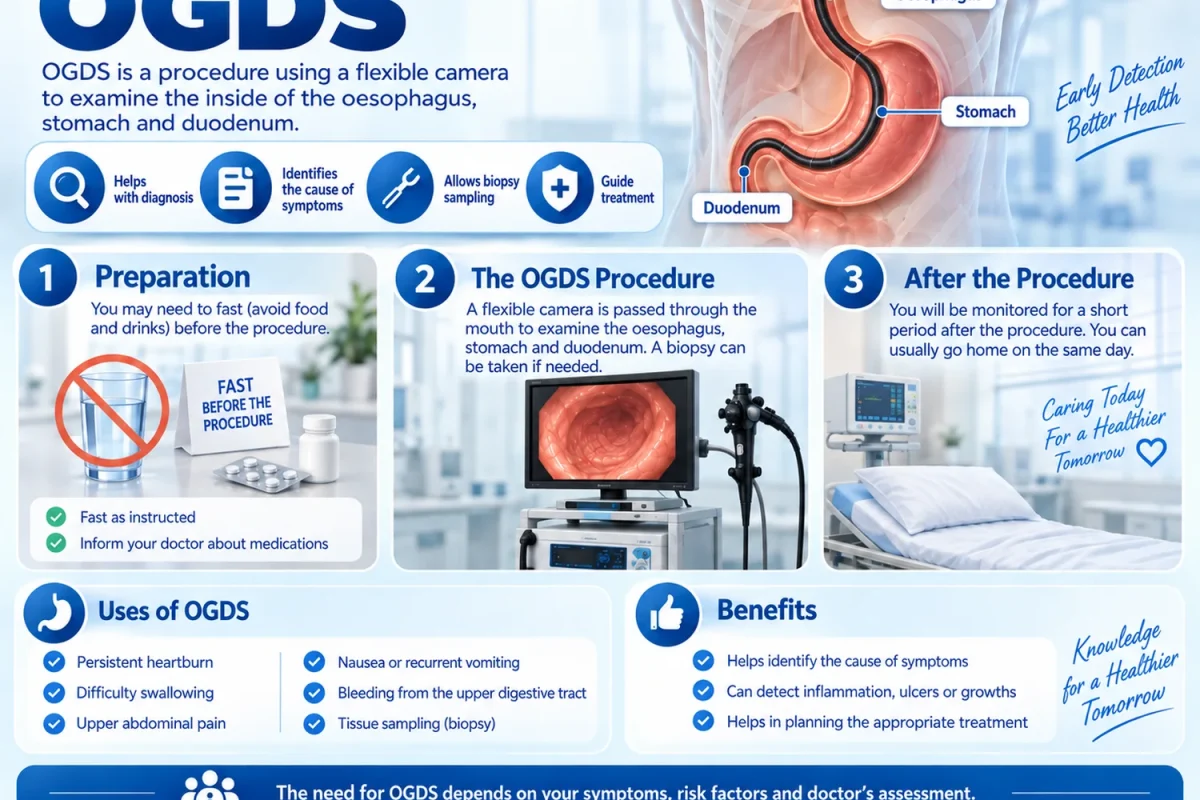
During the Procedure
- During OGDS, the doctor can look for inflammation, ulcers, sources of bleeding and suspicious changes, and can take biopsies if required. Throat anaesthetic and/or sedation may be used when appropriate to improve comfort.