Abdominal & gallbladder
Hernia
A lump in the groin or abdomen that appears when standing, coughing or straining may be a hernia.
Seek urgent assessment if
- The lump becomes very painful and cannot be pushed back in
- Vomiting or abdominal bloating develops
- The skin over the hernia changes colour
A hernia occurs when tissue or part of the bowel pushes through a weak area in the abdominal wall. Hernias may occur in the groin, at the navel or through a previous surgical scar.
When should you be assessed?
- A lump in the groin, navel or abdominal wall
- A feeling of heaviness or discomfort
- Pain when coughing, straining or lifting
- Swelling that becomes more noticeable when standing
How is it assessed?
- Clinical examination
- Ultrasound or CT scan in selected cases
- Pre-operative health assessment if surgery is required
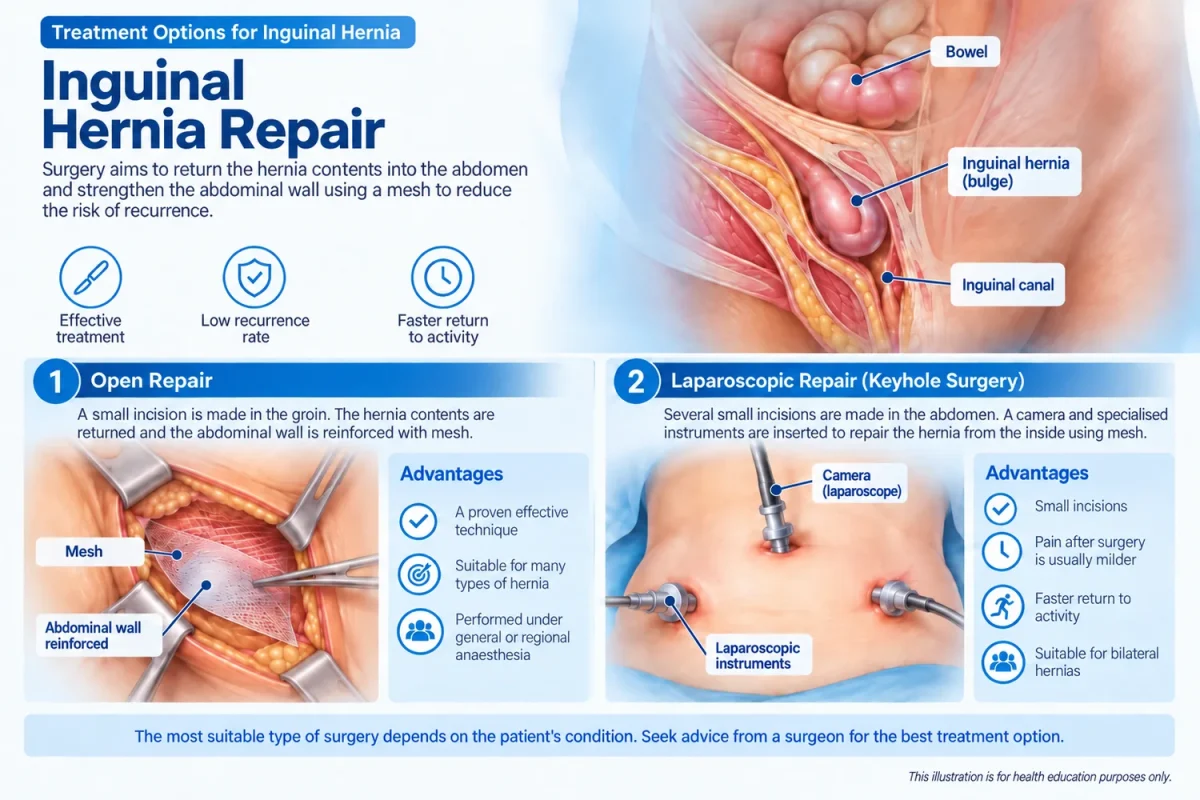
Treatment Options
Hernias are treated surgically. If a hernia is symptomatic or at risk of complications, earlier repair may be recommended. Surgery may be performed laparoscopically or through an open approach depending on the type and size of the hernia, previous surgery and the patient’s condition.