Skip to content

Health information

Breast Lumps

Breast & endocrine · 1 min

Not every breast lump is cancer, but new changes should not be ignored.

Not every lump is cancer — but it should be checked

A breast lump is not always cancer, but it should be assessed. The assessment starts with a clinical examination, and what that suggests decides the next step.
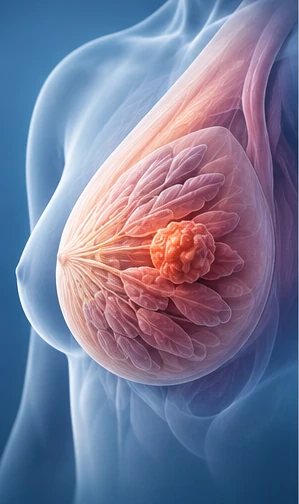
Illustration of a breast with a lump inside the breast tissue.

Depending on the findings, this may include an ultrasound and/or a mammogram, a biopsy of a suspicious area, or monitoring when the change is not suspicious. If cancer is confirmed, staging investigations are used to plan treatment.

If your symptoms persist or you are unsure of the cause, arrange an assessment.

Breast changes may be caused by benign or malignant conditions. Early assessment helps determine whether imaging, biopsy, monitoring or treatment is required.

When should you be assessed?

  • A new breast or armpit lump
  • A change in breast shape or size
  • Skin dimpling or an orange-peel appearance
  • A nipple turning inward
  • Blood or unusual discharge from the nipple
  • Skin changes or a wound that does not heal

Treatment Options

Breast cancer treatment is tailored to the type and stage of disease. Surgery may involve wide local excision or mastectomy, together with assessment of the lymph nodes. Other treatments such as chemotherapy, radiotherapy, hormone therapy or targeted therapy may also be required.

Read More: Breast Conditions & Cancer

Health information

Patient Education

Read health information
  • Blood in the Stool: Haemorrhoids or Cancer?

    Why blood colour alone is not enough to determine the cause.

    Colorectal & perianal

    Read More
  • Colorectal Cancer Can Be Asymptomatic

    The importance of screening and understanding risk factors.

    Colorectal & perianal

    Read More
  • Do Haemorrhoids Need Surgery?

    When conservative treatment may be enough and when a procedure is considered.

    Colorectal & perianal

    Read More
  • Haemorrhoid Grades

    A simple explanation of Grades I to IV.

    Colorectal & perianal

    Read More

Book an Appointment

If your symptoms persist or you are unsure of the cause, arrange an assessment.